 English
 中文简体
中文简体
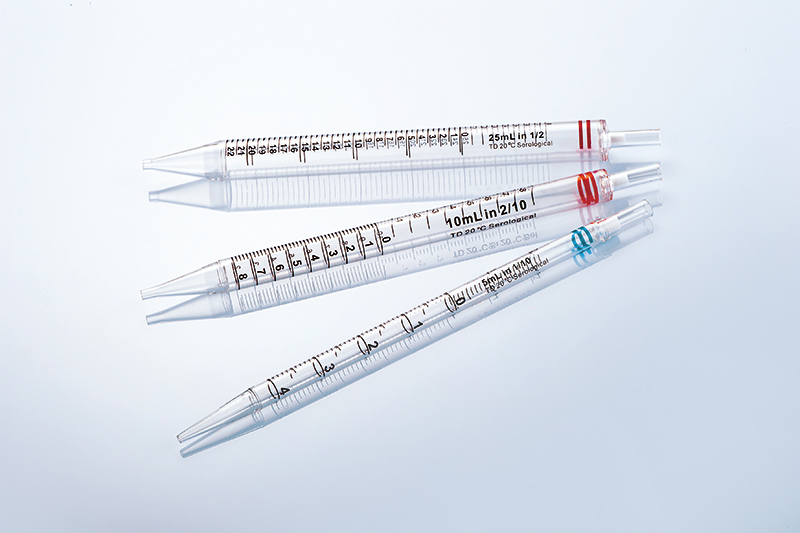
Serological Pipettes are essential laboratory tools widely used for precise measurement and transfer of liquid volumes. They play a critical role in applications ranging from cell culture to analytical testing and clinical diagnostics. Among the various types of Serological Pipettes, two main categories are distinguished based on their design and method of liquid discharge: blow-out and non-blow-out pipettes.
Definition and Structural Differences
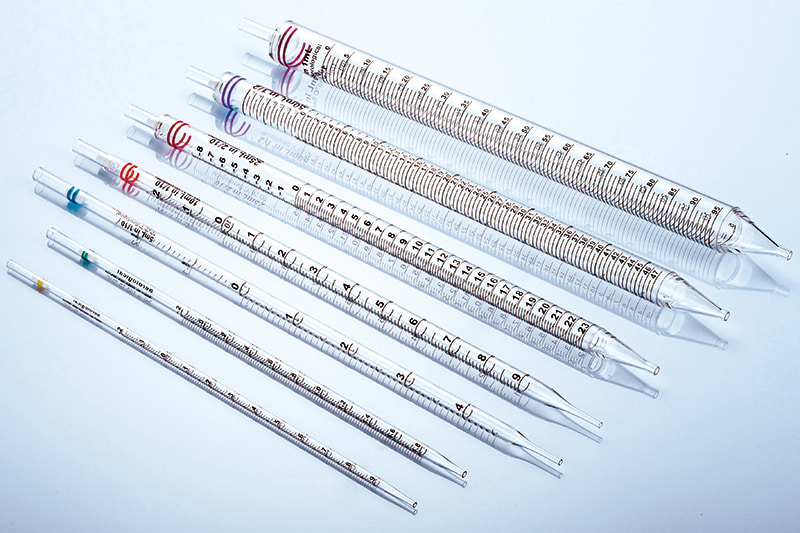
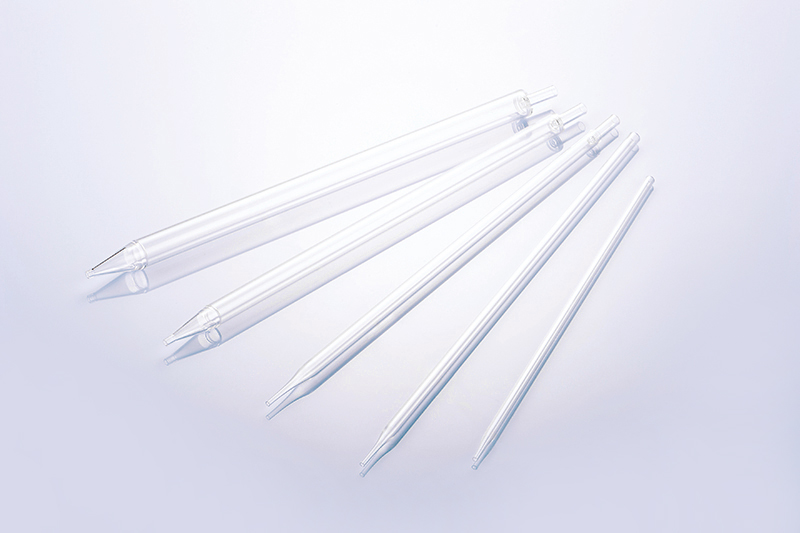
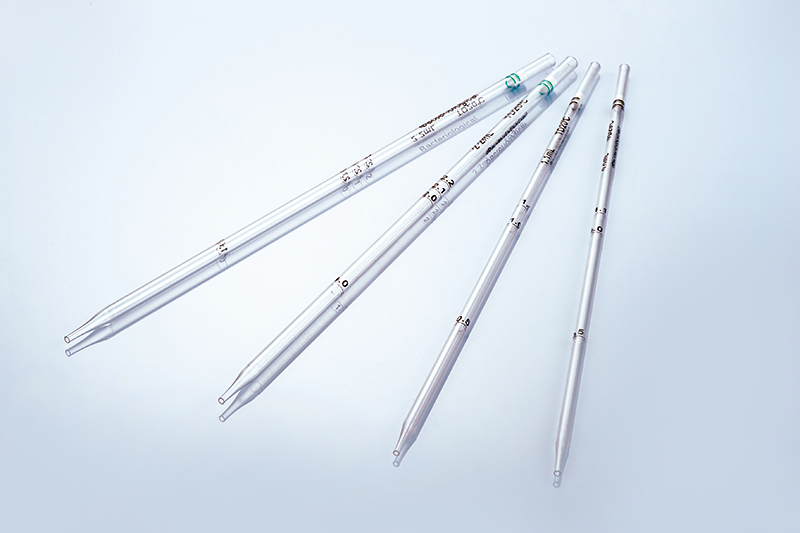
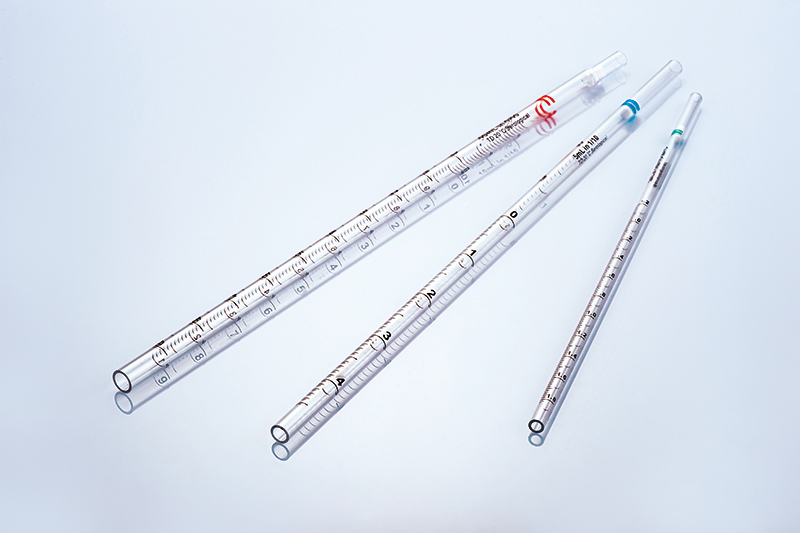
Serological Pipettes are typically cylindrical tubes graduated with volume markings. They can be made from borosilicate glass, polystyrene, or polypropylene, depending on the intended use. The key structural difference between blow-out and non-blow-out pipettes lies in the tip design and graduation marking interpretation.
Blow-out Serological Pipettes are designed with a small etched ring or double ring near the top of the pipette. This ring indicates that residual liquid remaining after normal drainage must be expelled by an external force, typically using a pipette aid or bulb. Without this extra step, the delivered volume may not reach the intended measurement.
In contrast, Non-blow-out Serological Pipettes have graduations that account for the residual liquid in the tip. The liquid is allowed to drain naturally by gravity, and no additional expelling is required. The entire liquid volume is considered delivered once the pipette has drained completely, making these pipettes suitable for routine liquid handling where extreme precision is not critical.
The table below summarizes these structural differences:
| Feature | Blow-out Serological Pipettes | Non-blow-out Serological Pipettes |
|---|---|---|
| Tip Marking | Etched or double ring | No ring |
| Residual Liquid | Must be expelled | Drains naturally |
| Delivery Accuracy | Requires additional action | Automatic |
| Typical Usage | High-precision assays | Routine transfers |
Volume Accuracy and Measurement Considerations
One of the primary concerns for users of Serological Pipettes is volume accuracy. Blow-out pipettes are commonly employed in applications where precise delivery is required, as they ensure the complete transfer of the measured liquid.
Non-blow-out pipettes, while still accurate, may retain a small amount of liquid in the tip. In procedures where slight variations in delivered volume are acceptable, such as general media transfers or dilutions, non-blow-out pipettes are often preferred.
It is important for laboratory personnel to recognize that the accuracy of blow-out pipettes depends on the correct use of pipette aids, and improper expelling can introduce errors. Conversely, non-blow-out pipettes rely on correct reading of the graduation marks, and misinterpretation can also affect results.
Material and Sterilization Considerations
Serological Pipettes can be manufactured from a variety of materials, each with implications for performance and sterilization:
- Glass pipettes are durable, resistant to chemical reactions, and can be autoclaved for sterilization. They are available in both blow-out and non-blow-out formats.
- Plastic pipettes (polystyrene or polypropylene) are typically disposable and suitable for sterile applications, reducing cross-contamination risk. Blow-out variants are less common in plastic due to their design constraints.
When selecting pipettes, users must consider chemical compatibility, sterilization methods, and whether the pipette will be reused or disposed of after a single experiment.
Handling Techniques
Proper handling of Serological Pipettes is essential to maintain accuracy and prevent contamination.
For blow-out pipettes, the user should:
- Attach a pipette aid or bulb securely.
- Draw the liquid to the desired volume mark.
- Allow the liquid to drain naturally.
- Expel the remaining liquid using the pipette aid, ensuring complete delivery.
For non-blow-out pipettes, the steps are simpler:
- Use a pipette aid to draw the liquid to the desired mark.
- Allow the liquid to drain fully by gravity.
- No additional expelling is required.
Training and practice are recommended to minimize errors, particularly when transitioning between blow-out and non-blow-out pipettes in a laboratory setting.
Applications and Use Cases
The choice between blow-out and non-blow-out Serological Pipettes depends on the precision requirements and experimental context:
- Blow-out pipettes are ideal for applications that demand high accuracy, such as preparing standard solutions, precise titrations, or transferring small volumes of reagents in analytical procedures.
- Non-blow-out pipettes are well-suited for routine laboratory tasks, including cell culture media addition, sample dilution, or general liquid handling.
The table below highlights common applications:
| Application | Preferred Pipette Type | Reason |
|---|---|---|
| Analytical assays | Blow-out | Ensures full delivery of measured volume |
| Cell culture media transfer | Non-blow-out | Convenience and speed |
| Dilution series | Blow-out | Maintains precision across multiple steps |
| Routine liquid handling | Non-blow-out | Simplified operation |
Selection Criteria for Laboratory Procurement
Laboratory managers and procurement specialists must evaluate several factors when selecting Serological Pipettes:
- Required accuracy and reproducibility – Blow-out pipettes offer higher precision but require careful handling.
- Volume range needed – Ensure the pipette graduations match experimental requirements.
- Material and chemical compatibility – Consider glass vs. plastic and potential interactions with reagents.
- Sterility requirements – Determine whether pre-sterilized disposable pipettes or autoclavable options are needed.
- Ease of handling and workflow efficiency – Non-blow-out pipettes can improve speed in routine tasks.
Budget considerations may also play a role, as disposable plastic non-blow-out pipettes can reduce cleaning and sterilization costs, whereas reusable blow-out glass pipettes may have higher upfront costs but longer lifespans.
Common Errors and Troubleshooting
Even with proper selection, errors can occur with Serological Pipettes. Some common issues include:
- Incomplete expelling in blow-out pipettes, leading to under-delivery.
- Misreading graduations in non-blow-out pipettes, causing inaccurate measurements.
- Cross-contamination if pipettes are reused without proper sterilization.
- Liquid retention due to surface tension, particularly with viscous fluids.
Regular training, standard operating procedures, and verification of pipette performance are critical to minimize these issues.
Advantages and Limitations
Blow-out Serological Pipettes provide high accuracy and flexibility for precise experiments but require more careful handling.
Non-blow-out Serological Pipettes offer ease of use and convenience for routine operations but may not be suitable for experiments demanding exact volume transfer.
Understanding these trade-offs enables laboratory teams to choose the appropriate pipette type for each task.
Environmental and Safety Considerations
Proper disposal and handling of Serological Pipettes are important for laboratory safety:
- Disposable plastic pipettes reduce contamination risk but contribute to laboratory waste.
- Glass pipettes can be sterilized and reused, reducing environmental impact but requiring careful handling to avoid breakage.
- Chemical compatibility must be verified to prevent degradation or hazardous reactions.
Laboratories should implement protocols for safe pipette disposal, storage, and chemical handling.
Conclusion
Selecting between blow-out and non-blow-out Serological Pipettes requires careful consideration of accuracy requirements, experimental applications, material compatibility, and laboratory workflow. Blow-out pipettes are preferable for high-precision tasks, while non-blow-out pipettes are suitable for routine liquid transfers. Understanding their structural differences, handling techniques, and appropriate applications ensures reliable and reproducible laboratory results.
FAQ
Q1: Can blow-out and non-blow-out Serological Pipettes be used interchangeably?
A1: They can be used interchangeably in some routine tasks, but precision-sensitive applications require selecting the correct type based on delivery accuracy.
Q2: How do I identify a blow-out Serological Pipette?
A2: Blow-out pipettes typically feature an etched or double ring near the top of the pipette indicating that residual liquid must be expelled.
Q3: Are non-blow-out pipettes suitable for sterile applications?
A3: Yes, many non-blow-out pipettes are pre-sterilized and disposable, making them suitable for sterile laboratory procedures.
Q4: What is the typical volume range for Serological Pipettes?
A4: Serological pipettes are commonly available in ranges from 1 mL to 50 mL, with graduations for accurate measurement.
Q5: How should Serological Pipettes be stored?
A5: They should be stored vertically or in designated racks to prevent contamination, bending, or breakage.
References
- Laboratory Equipment Guidelines, International Laboratory Standards, 2022.
- Principles of Liquid Handling, Scientific Publishing House, 2021.
- Good Laboratory Practices for Pipetting, Analytical Science Journal, 2020.