 English
 中文简体
中文简体
In modern laboratory research, ultrafiltration centrifuge tubes are indispensable tools for sample concentration, purification, and buffer exchange. These tubes combine the principles of ultrafiltration and centrifugal force to separate molecules based on size. The efficiency, safety, and accuracy of this process depend not only on membrane characteristics but also on the materials used in the construction of the tubes. The choice of material directly affects chemical compatibility, mechanical strength, biocompatibility, and sample recovery.
Understanding the structure of ultrafiltration centrifuge tubes
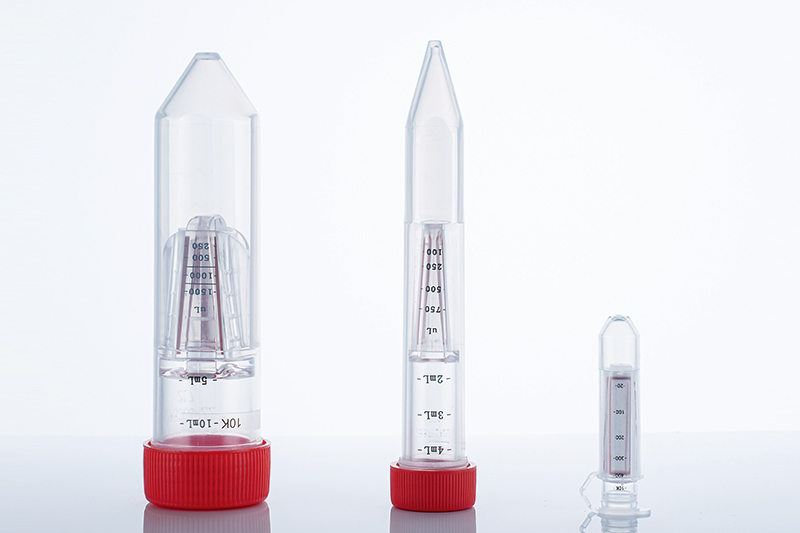
Before discussing the materials, it is essential to understand the basic composition of ultrafiltration centrifuge tubes. These tubes are typically composed of three main components:
- Body (or housing) – the outer shell that holds the sample and membrane system.
- Membrane (or filter layer) – the semi-permeable component responsible for molecular separation.
- Cap and sealing components – parts that ensure a leak-proof and contamination-free operation.
Each of these components requires specific material properties to withstand high centrifugal forces, prevent sample leakage, and maintain chemical stability. The selection of suitable materials depends on the centrifugation conditions, the type of solvent or buffer, and the sensitivity of the biomolecules being processed.
Common materials used for tube bodies
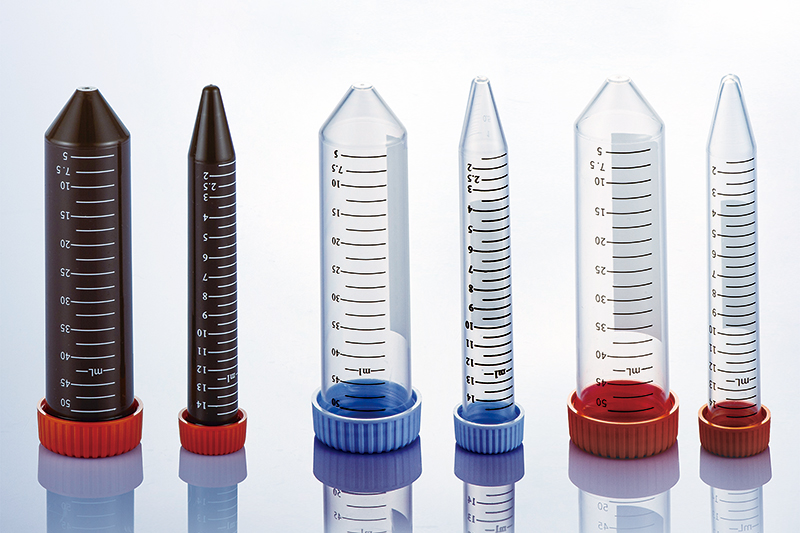
The main body of ultrafiltration centrifuge tubes must be durable, chemically inert, and capable of maintaining structural integrity under high-speed centrifugation. The most frequently used materials include polypropylene (PP), polycarbonate (PC), and polyethersulfone (PES). Each has distinct mechanical and chemical properties suited to particular laboratory requirements.
Polypropylene (PP)
Polypropylene is one of the most widely used materials in laboratory plasticware due to its balance of chemical resistance, strength, and cost-effectiveness.
Key characteristics of polypropylene used in ultrafiltration centrifuge tubes:
- Chemical resistance: PP resists a wide range of organic solvents, weak acids, and bases, making it suitable for various biological and chemical applications.
- Mechanical stability: It maintains its structure under high centrifugal speeds without deformation.
- Temperature tolerance: PP can withstand temperatures from approximately –20°C to 120°C, allowing for both refrigerated and heated centrifugation.
- Low protein binding: This reduces sample loss during ultrafiltration, which is critical when handling sensitive biological materials such as proteins or enzymes.
Because of these advantages, PP is commonly selected for general-purpose ultrafiltration centrifuge tubes used in molecular biology and biochemistry.
Polycarbonate (PC)
Polycarbonate offers high clarity and impact resistance, which makes it valuable in laboratory settings where visual monitoring of the sample is important.
Features of polycarbonate in ultrafiltration centrifuge tubes:
- Transparency: The clear body allows researchers to visually observe sample concentration and phase separation.
- High strength: PC exhibits strong impact resistance, suitable for moderate to high-speed centrifugation.
- Moderate chemical resistance: Although PC is not as chemically inert as PP, it performs well in neutral aqueous solutions and mild buffers.
- Dimensional stability: It resists warping under pressure and temperature variations.
However, PC can be sensitive to certain organic solvents and high-pH solutions, limiting its use in some chemical analyses.
Polyethersulfone (PES)
Polyethersulfone is valued for its thermal stability and chemical robustness, often used in high-performance laboratory filtration systems.
Advantages of PES as a body material:
- Excellent thermal resistance: It can endure higher sterilization temperatures than PP or PC.
- Superior chemical stability: PES resists degradation from repeated exposure to cleaning agents and biological samples.
- High mechanical integrity: Its structure remains stable under continuous centrifugation cycles.
- Transparency: Though not as clear as PC, PES still allows adequate visual inspection of samples.
Due to these properties, PES is preferred for advanced ultrafiltration centrifuge tubes used in demanding biomedical and pharmaceutical research environments.
Common materials used for membranes
The membrane is the functional core of an ultrafiltration centrifuge tube. It defines the molecular weight cut-off (MWCO) and determines the efficiency of separation. The membrane materials must exhibit selective permeability, hydrophilicity, and low nonspecific binding.
Commonly used membrane materials include polyethersulfone (PES), regenerated cellulose (RC), and cellulose acetate (CA).
Polyethersulfone (PES) membranes
PES membranes are widely used due to their consistent pore size, mechanical durability, and low protein binding.
Key benefits of PES membranes:
- High flow rate: PES provides fast filtration with minimal pressure buildup.
- Chemical resistance: Suitable for aqueous and mild organic solutions.
- Low fouling tendency: Reduces clogging and maintains high recovery rates.
- Broad pH range tolerance: PES membranes remain stable from pH 1 to 10, supporting diverse sample conditions.
PES is often chosen for concentrating proteins, nucleic acids, and other macromolecules where sample integrity is critical.
Regenerated cellulose (RC) membranes
RC membranes are derived from natural cellulose that has been chemically treated to enhance performance and consistency. They are hydrophilic, low in nonspecific adsorption, and biocompatible.
Advantages of regenerated cellulose membranes:
- Excellent chemical compatibility: Resistant to most solvents and detergents used in biochemical research.
- Minimal protein binding: Helps ensure accurate recovery and concentration of biomolecules.
- Thermal stability: Withstands sterilization processes without losing pore structure.
- Consistent performance: Maintains separation efficiency across repeated runs.
RC membranes are especially suitable for applications requiring precise concentration or desalting of protein and enzyme samples.
Cellulose acetate (CA) membranes
Cellulose acetate membranes are known for their low affinity for proteins and stable pore structure under pressure.
Main features of CA membranes:
- Low protein adsorption: Ideal for biological samples where minimizing binding is crucial.
- Hydrophilic nature: Ensures consistent and even sample flow.
- Moderate chemical resistance: Compatible with most aqueous solutions but limited against strong solvents.
- Cost efficiency: CA membranes are relatively affordable, suitable for large-volume applications.
CA membranes are frequently used for routine concentration and buffer exchange processes in biotechnology laboratories.
Comparison of commonly used materials
To summarize the distinctions between commonly used materials in ultrafiltration centrifuge tubes, the following table presents an overview:
| Component | Material | Main Advantages | Limitations | Common Applications |
|---|---|---|---|---|
| Tube Body | Polypropylene (PP) | Chemical resistance, low protein binding, economical | Limited transparency | General biological filtration |
| Tube Body | Polycarbonate (PC) | High clarity, impact resistance | Sensitive to strong solvents | Visual sample monitoring |
| Tube Body | Polyethersulfone (PES) | High strength, thermal and chemical stability | Higher cost | High-performance biomedical analysis |
| Membrane | Polyethersulfone (PES) | Fast flow, low fouling, wide pH tolerance | Slightly hydrophobic | Protein and nucleic acid concentration |
| Membrane | Regenerated Cellulose (RC) | Biocompatible, low protein binding | Higher cost than CA | Enzyme and protein concentration |
| Membrane | Cellulose Acetate (CA) | Hydrophilic, economical, low binding | Limited solvent resistance | Routine sample concentration |
This table helps illustrate how material selection impacts application performance and cost-effectiveness.
Factors influencing material selection
The appropriate material for ultrafiltration centrifuge tubes is determined by the nature of the sample, centrifugation parameters, and experimental objectives. Several key factors should be considered:
Chemical compatibility
Different materials respond differently to solvents, acids, and bases. For instance, polypropylene and regenerated cellulose exhibit broad chemical resistance, whereas polycarbonate may degrade in the presence of organic solvents. Ensuring compatibility avoids sample contamination and material degradation.
Centrifugation speed and pressure
High-speed centrifugation generates significant mechanical stress. Materials such as polyethersulfone or polycarbonate are preferred for high-speed applications due to their mechanical robustness.
Sample type and sensitivity
When working with proteins or enzymes, minimizing nonspecific adsorption is essential. In such cases, cellulose acetate and regenerated cellulose membranes are ideal due to their hydrophilic and biocompatible properties.
Temperature range
Some experimental protocols require heating or cooling. Polypropylene and polyethersulfone offer broader temperature stability compared to other plastics.
Sterilization requirements
Repeated sterilization processes can degrade some materials. PES and RC membranes maintain their integrity during autoclaving, making them suitable for aseptic laboratory environments.
Quality and safety considerations
The reliability of ultrafiltration centrifuge tubes depends not only on the material’s physical and chemical properties but also on manufacturing quality. Consistency in pore size, membrane uniformity, and sealing integrity ensures reproducible results.
Important quality considerations include:
- Material purity: Use of medical- or laboratory-grade polymers prevents leaching of additives or plasticizers.
- Non-toxicity: Materials should not release any substances that may affect sample composition.
- Mechanical testing: Tube bodies must be tested for resistance to cracking under maximum centrifugal force.
- Membrane validation: Membranes should be verified for uniform pore distribution and accurate MWCO performance.
Compliance with international laboratory material standards further enhances reliability and traceability.
Environmental and sustainability aspects
With increasing focus on sustainability in laboratory practices, the environmental impact of materials used in ultrafiltration centrifuge tubes is an emerging consideration.
Key sustainability factors include:
- Material recyclability: Polypropylene and polycarbonate components can often be recycled if properly decontaminated.
- Reduced single-use plastics: Some laboratories now use reusable PES-based tube designs for long-term applications.
- Low-waste membrane production: Advances in manufacturing have improved material yield and reduced solvent use during membrane fabrication.
- Responsible disposal: Used membranes and tubes containing biological materials must be disposed of according to biosafety regulations to minimize environmental risks.
Sustainable design and material choices contribute to environmentally responsible laboratory operations.
Emerging material innovations
Recent advances in polymer science have led to the development of next-generation materials for ultrafiltration centrifuge tubes, aiming to enhance performance and sustainability.
Examples of innovations include:
- Modified PES membranes with improved hydrophilicity to reduce fouling and enhance flow rates.
- Nanocomposite-enhanced plastics that strengthen the tube body without increasing weight.
- Bio-based polymers, such as renewable polypropylene alternatives, to lower environmental impact.
- Surface coatings designed to minimize nonspecific adsorption and improve sample recovery efficiency.
These developments demonstrate a continued commitment to improving laboratory product performance through material engineering.
Conclusion
The performance, reliability, and safety of ultrafiltration centrifuge tubes depend heavily on the materials from which they are made. Polypropylene, polycarbonate, and polyethersulfone are widely used for tube bodies, offering varying degrees of strength, chemical resistance, and transparency. For membranes, polyethersulfone, regenerated cellulose, and cellulose acetate are the most common choices, each with distinct advantages for specific sample types and applications.
Selecting the correct material ensures compatibility, accuracy, and durability in laboratory workflows. As technology advances, material innovations continue to refine the efficiency and environmental sustainability of ultrafiltration centrifuge tubes, supporting the evolving needs of modern scientific research.